
- Your shopping cart is empty!

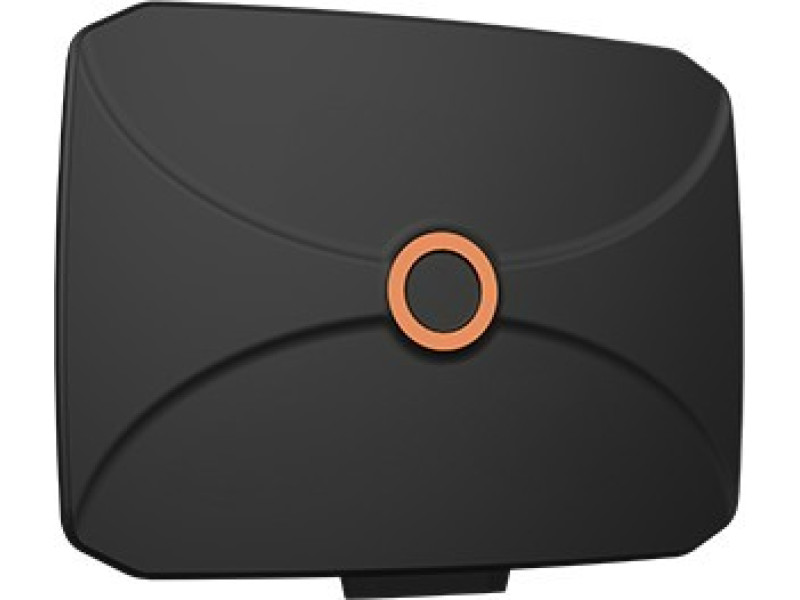
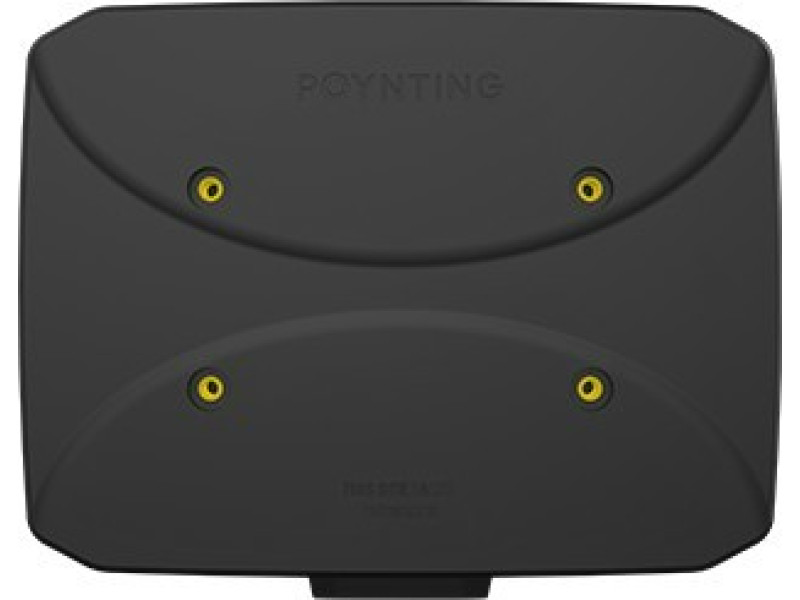
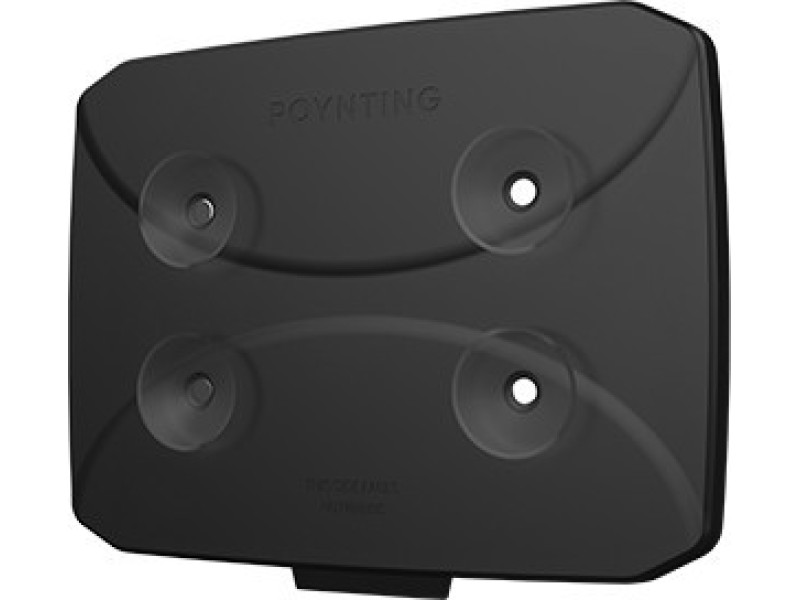

The PANL-401 is a state-of-the-art, multi-functional panel antenna offering a 5-in-1 solution comprising four cellular antennas and one dual-band active GNSS antenna. This delivers outstanding cellular and GPS reception performance for both vehicle and fixed installations.
The antenna is ultra-wideband, covering the 410–6000 MHz frequency range; this ensures compatibility with various operators and technologies while making it ready for future 5G applications up to 6 GHz. The PANL-401 strikes an excellent balance between omnidirectional coverage, pattern diversity, and effective radiation at the optimal elevation—key factors in the transport sector.
The integrated dual-band GNSS antenna ensures reliable navigation and precise positioning, even in challenging environments.
With its low-profile, compact design, the PANL-401 blends seamlessly into most environments. Simple window mounting using the included suction cups or adhesive mount makes installation quick and straightforward.
The antenna is cross-polarized with linear vertical and horizontal elements for 4x4 MIMO performance and features a robust, IP65-rated enclosure that is weather-, dust-, and vandal-resistant, as well as E-mark certified for automotive use.
The PANL-401 is suitable for mobile connectivity in vehicles, robust communication systems for emergency and essential services, continuous operation in home offices and small businesses, and stable connections for remote locations and infrastructure monitoring.
Features
Applications
Explanation of frequency bands
When choosing an antenna, pay attention to which frequency bands the antenna supports. Depending on which operator and where the antenna will be used, the frequency bands vary. Larger cities use 2600MHz while smaller towns use 800/900MHz with some support bands in between such as 1800/2100MHz.
A higher frequency band gives a higher speed but also has a shorter range. The same applies to the antenna, if you have a base station that transmits on 2600MHz, your antenna, antenna cable and the location of the antenna become more important than on a lower frequency band. Explanation of signal loss we will go through soon. Higher frequency bands also mean shorter range from the base station.
450MHz (coverage band) also known as the Net1 band is the frequency band that covers the most area in Sweden. Therefore, Net1 is known to be able to have reception where other operators don´t have a chance, but with low download and upload speeds. The reason why this band is called Net1 is because that the company Net1 has exclusive rights to this frequency band.
800MHz (coverage band) is used by all common operators, excluding Net1. The low frequency band means that 800MHz covers a lot of space. Therefore, the band is used outside big cities or smaller towns. 800MHz is the most used frequency band around Europe.
900MHz (coverage band) is the band that Tele2 and Telenor initially used as coverage band. 900MHz is a more unusual LTE band and in the beginning the band caused some problems when the clients (mobile phones etc.) could not connect to 900MHz. Today, the mobile phone manufacturers have adapted the mobile phones to be able to communicate on 900MHz.
1800MHz (capacity band) is the latest frequency band launched. All operators today use this band in metropolitan centers (apart from Net1).
2600MHz (capacity band) is a very well-used frequency band all over Europe. 2600MHz is the highest frequency band used for LTE, this means that the band also has the shortest range compared to 800/900MHz. Due to the high capacity, the band is used in metropolitan environments where many base stations are required to cover as much surface as possible and have as high a capacity as possible.
Frekvensplan 4G
| Frequency band | Net1 | Tele2 | Telia | Telenor | Tre |
|---|---|---|---|---|---|
| 450MHz (Band 31) | |||||
| 800MHz (Band 20) | |||||
| 900MHz (Band 8) | |||||
| 1800MHz (Band 3) | |||||
| 2600MHz (Band 38) |


